
The Uncaused Life
Chapter 10

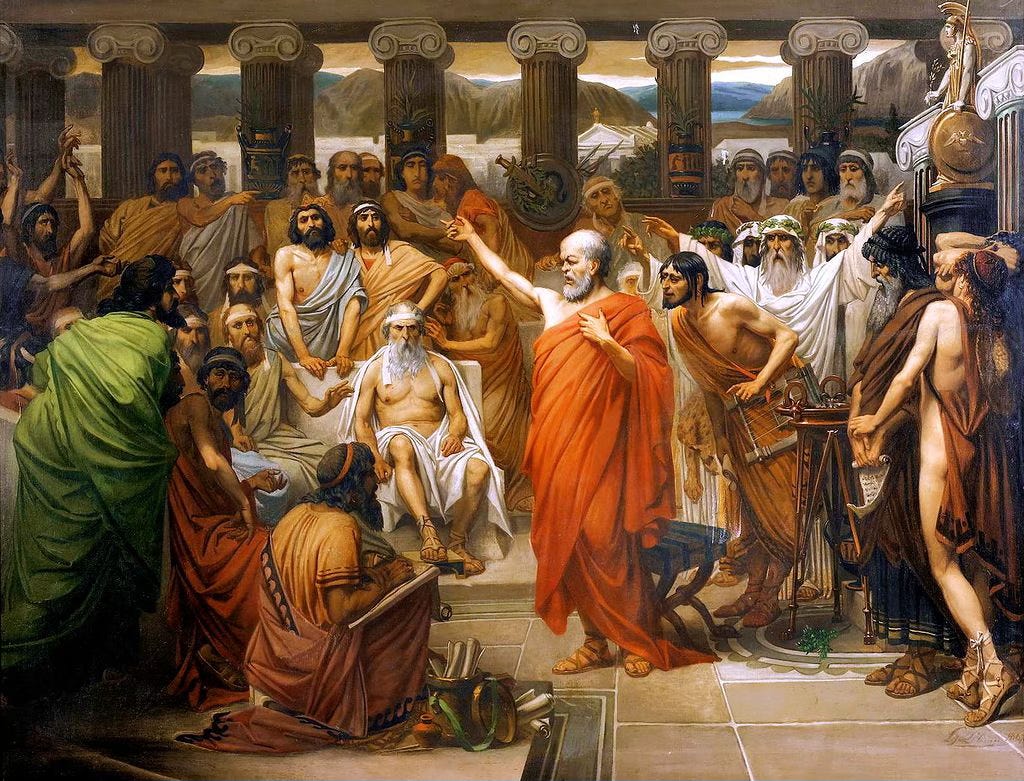
Author’s Note: Below is a draft of Chapter 10, the final chapter of The Prophet of Causation, where I connect Ayn Rand’s esthetics with her view of emotions and of philosophy itself. This is part of my quest to raise the importance of esthetics in Objectivist philosophy. It’s often tacked on as an afterthought, but it certainly wasn’t an afterthought for Ayn Rand, who began with an artistic vision and filled in its philosophical foundations later.
As usual, let me know about any typos you spot, along with feedback on the philosophical content, its clarity, and anything you think I got wrong or missed or could have added. Reply in the comments field, or hit “reply” to this post in your e-mail.
If you’re only getting the teaser for this post and want to get more, please subscribe to support this project and be able to access the entire draft and the lectures on which it is based.
I may add a final postscript or epilogue to this draft, but I’m still rolling the idea around in my mind, since I like the way this ends. Let me know what you think.
Here’s the chapter.
Chapter 10: The Uncaused Life
When we moved from ethics to politics, we were narrowing our focus. Ethics is concerned with all of life, public and private, while politics only concerns the use of force and the role of the state. Esthetics—the study of art and its role in life—might seem to be a similar narrowing, examining only a specific field. Yet it actually draws our attention out more broadly, offering the opportunity for a grand integration of metaphysics, morality, and everything else.
Esthetics usually comes last in the list of the main branches of philosophy: metaphysics, epistemology, ethics, politics, and esthetics. In practice, it goes last because most philosophers are not well versed in the arts, so they tend to tack it on as an afterthought.1 But it ought to come last for the opposite reason: Esthetics offers a summation and integration of everything else in philosophy, including the role of philosophy itself.
A Philosophy of Literature
Ayn Rand’s main work on esthetics is The Romantic Manifesto. It addresses art in general and all the main forms of art, but it’s worth remembering that the book’s subtitle is: “A Philosophy of Literature.” What she has to say about the other arts is offered in passing, not systematically or in depth, compared to what he she has to say about her own art form, the novel.2
The central theme of Rand’s writing on literature is the importance of volition and its embodiment in the plot of a story. Her description of the role of a plot invokes themes that we will find familiar.